The Subsidy
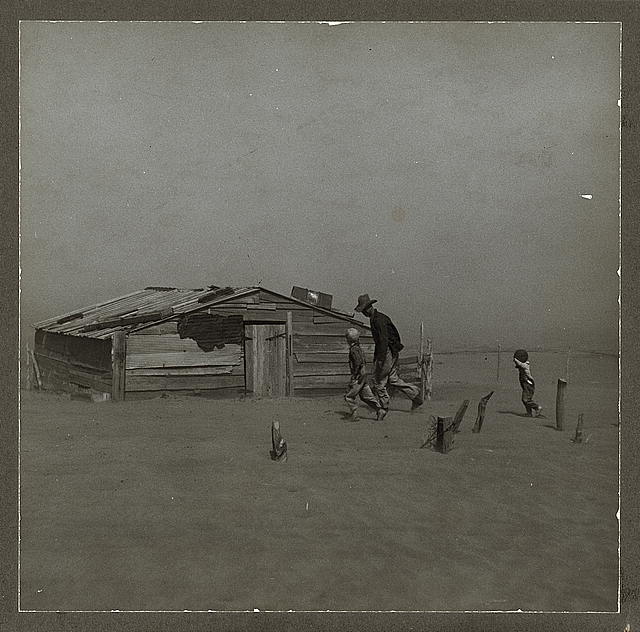
There’s a lake I’ll call somewhere. It used to be the size of a small state. The water was salt — saltier than the ocean, which is why it never hosted fish — but it hosted ten million migratory birds a year and a brine-shrimp industry that fed a sizable share of the world’s farmed seafood.
I say used to because we’re past the tense where it’s worth pretending. The lake is at about a third of its historic volume. The exposed lakebed — the part that hasn’t been water in two decades — is laced with arsenic and other heavy metals that the lake had quietly held in solution for ten thousand years. When the wind comes off the desert it picks that up and carries it into the lungs of the people living downwind. About two million of them. They are breathing the bed of a dying lake.
A few hundred miles from the lake, a few weeks ago, a county commission approved a data center twice the size of a famous island that anchors a major financial city. Sixty-two square miles. Nine gigawatts of power — more than the entire state currently consumes. Cooled by water drawn from a watershed in active collapse. The thermal exhaust alone, according to one university physicist’s analysis, will raise nighttime temperatures in the surrounding valley by eight to twelve degrees.
Almost four thousand local residents lodged objections. The commission approved it anyway.
Here is the next move, which is the part to study carefully.
When the developer’s water-diversion application became inconvenient — too many filed objections, too much organized opposition — the developer withdrew the application. They announced a new one. The new application requires every objector who wants to be counted to file a fresh complaint, and to pay fifteen dollars to do so. The previous four thousand objections are invalidated. The people who object now have to pay for the privilege of being on record.
That is what extraction looks like at the procedural level. You can object, but the procedure has a turnstile, and the turnstile has a coin slot, and the coin goes one way.
The developer, an out-of-state billionaire whose face is familiar from a television show about money, called the objectors professional protesters, bused in from elsewhere. They are not bused in from elsewhere. They are ranchers, teachers, business owners, students, and retirees who live a short drive from the proposed site. The phrase professional protesters is the contemporary version of every dismissive phrase that ever attached itself to a community refusing to be a resource.
The state’s governor — the same governor who, a year earlier, asked the state to pray and fast to break the drought — has now said the project may proceed in phases, subject to conditions. The conditions, paraphrased: don’t break the lake, don’t raise the power bills. The lake is already broken. Power bills will rise. The conditions are conditions in the same way wishes are conditions.
Now look at the shape of the thing.
The data center will not pay for the lake. The lake’s value — to the birds, the brine shrimp, the ski industry, the lungs of the downwind population — was never on the developer’s balance sheet. The cost of the lake’s death will be paid by the people who breathe arsenic for the next forty years. The cost will be paid by the Indigenous communities whose ancestral lands sit downwind. The cost will be paid by the migratory birds that no longer have a staging stop on a continental flyway. The cost will not be paid by the developer.
That is a subsidy. Not a tax break. A subsidy — the state, on behalf of its people, transferred wealth from the lake and its dependents to the developer. The transfer was never voted on. The mechanism was dressed as a permitting process, but the actual delivery vehicle was the cubic feet of water per second the developer was permitted to extract for nothing, and the cubic miles of atmospheric heat the developer was permitted to dump for nothing, and the lungs the developer was permitted to fill with metal for nothing.
If the developer had to pay the real cost of what they were taking — the dust storms, the brine shrimp collapse, the ecosystem damage, the public health bill — they would not have built where they built. They would have built somewhere cooler, somewhere coastal, somewhere with a community organized enough to make them internalize what they were taking. They built where they built because the indebtedness fell on a community that could not write a bill for it.
A community is trying to write one now. They have forty-five days to collect a few thousand signatures and force the project to a ballot referendum. They might succeed. They might not. The fight is not finished.
But the developer’s posture toward the community — paid protesters, fifteen dollars to object, the procedure is the answer, the governor will sort it out — that posture is the tell. That posture is what the project thinks about the people in whose state it intends to live. They are an externality. The lake is an externality. The dust is an externality. The fifteen dollars are the price of being treated as a person and not an inconvenience.
The lake is the bill. Nobody mailed it to the right address.
The community is trying to forward it. We’ll see.
The story stands.